Solo RPG Without Writing: Playing Only with Dice and Cards
The Myth of the Mandatory Journal
\n
When people talk about solo RPGs, they often imagine a player writing pages and pages of heroic diary entries. Yet writing is not a requirement. Many players prefer a more streamlined experience, where dice and cards alone are enough to live the adventure.
\n
Pocket Quest is actually designed with this in mind: a session fits on one sheet, with quick rolls and immediate progression. But how do you play a full session without ever touching a pencil? Here are some concrete methods.
\n\n
1. Playing with Only Dice
\n
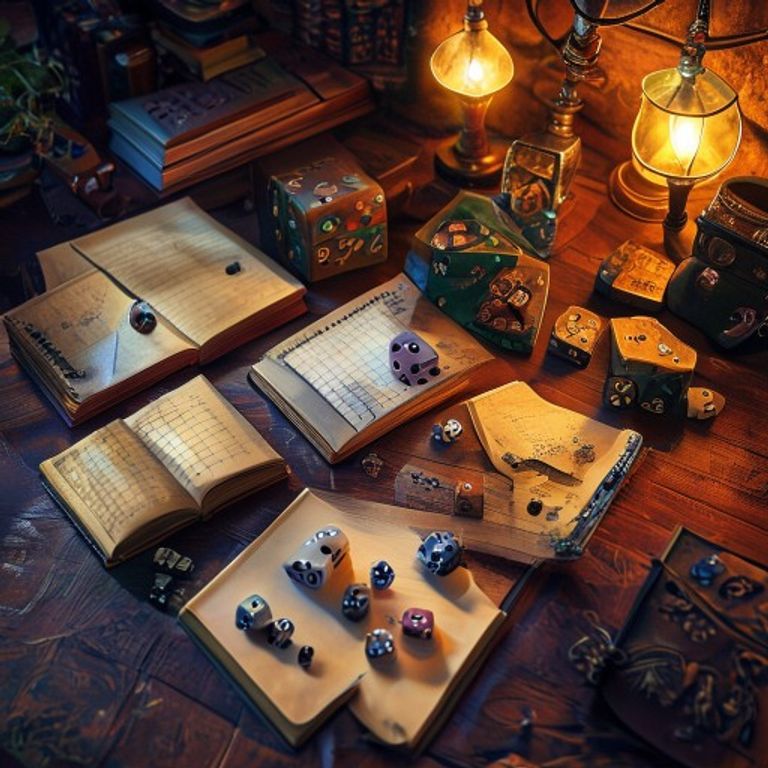
Dice are your best allies for replacing writing. Here’s how to structure a 100% dice-based session:
\n
The Dice Memory System
\n
Instead of writing down your hit points, equipment, or quests, use dice placed in front of you:
\n
- \n
- Life Die: a 6 or 8-sided die whose value decreases when you take damage
- Inventory Die: each face corresponds to a different item (1 = sword, 2 = shield, 3 = potion, etc.)
- Quest Die: the higher its value, the more you progress toward your goal
- Morale Die: represents your character’s state of mind
\n
\n
\n
\n
\n
Roll the inventory die before each action to know which item you’re using. You haven’t written anything, but everything is materialized in front of you.
\n\n
2. Playing with Standard Playing Cards
\n
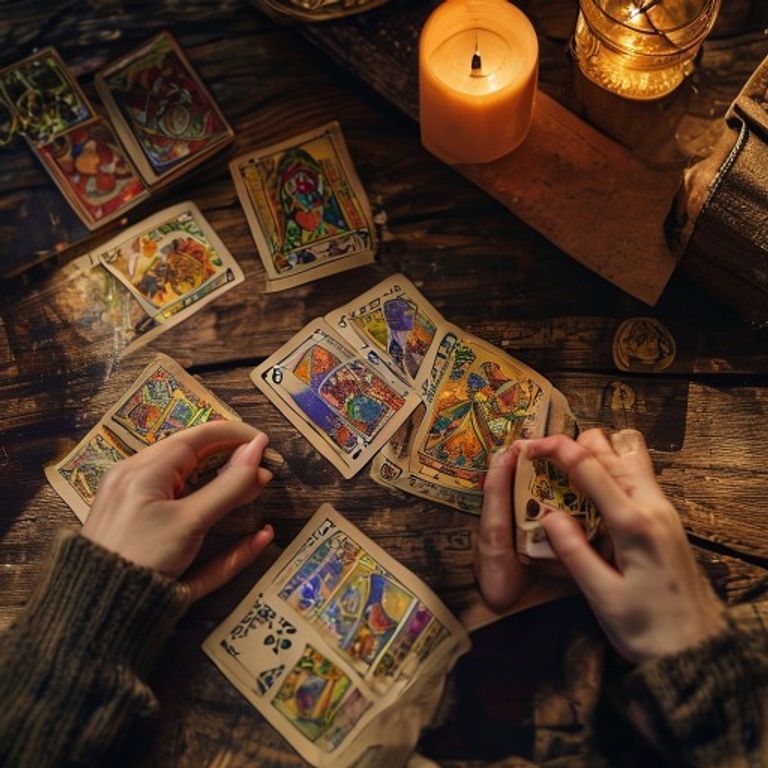
A deck of 54 cards can easily replace a notebook. Here’s how:
\n
The Adventure Hand
\n
Draw 3 to 5 cards at the start of the session:
\n
- \n
- Hearts = friendly encounter or positive resource
- Diamonds = treasure, discovery, reward
- Clubs = challenge, obstacle, trap
- Spades = combat, enemy, danger
- Ace = major event (good or bad depending on the suit)
- Jack/Queen/King = important NPC
\n
\n
\n
\n
\n
\n
\n
Discard cards as events unfold. When your hand is empty, the session is over. Simple and visual.
\n
The Card Counter
\n
To manage your resources without writing:
\n
- \n
- Your health = number of cards in a face-down pile
- Your inventory = face-up cards next to you
- Your experience = cards earned after each encounter
\n
\n
\n
\n\n
3. The Minimalist Game Board
\n
With only dice, cards, and a playing surface, you can materialize your adventure:
\n
- \n
- Zone A: the character (life die + morale die)
- Zone B: the environment (drawn cards)
- Zone C: enemies (threat die that increases)
- Zone D: resources (inventory dice)
\n
\n
\n
\n
\n
Move elements across the table to represent exploration. Each zone is a different location you travel through.
\n\n
4. Example of a No-Writing Session
\n
Situation: You’re exploring a cursed forest.
\n
- \n
- Roll a die to determine the encounter type (d6: 1-2 creature, 3-4 trap, 5-6 treasure)
- Draw a card to set the mood (suit = tone of the encounter)
- Resolve the obstacle with a die roll (your action die value vs. difficulty)
- Reward: draw a “loot” card or increase an inventory die
- Repeat until your card hand is depleted
\n
\n
\n
\n
\n
\n
Nothing was written down, but you just lived a complete adventure. Your “save file” is the state of your dice and cards on the table.
\n\n
5. Pocket Quest Tools for No-Writing Play
\n
Pocket Quest is especially well-suited to this approach:
\n
- \n
- Quick rolls flow without needing to note complex modifiers
- The Bestiary can be used with randomly drawn cards
- Pocket Quest oracles work with dice — no written phrases needed
- A standard session fits on a single page: one glance is enough
\n
\n
\n
\n
\n
Print the character sheet and use a small die to check boxes: you get a 100% tactile game, no pen required.
\n\n
Conclusion
\n
Solo RPG without writing is not only possible, but terribly effective for busy players or those who prefer pure gameplay over journaling. With dice, cards, and Pocket Quest, you have everything you need to live complete adventures… without ever uncapping a pen.
Enhance your no-writing games with Random Generators in Solo RPGs. And our Introduction to Solo RPG covers the basics.
Discover all my games on Itch.io
linquant.itch.io